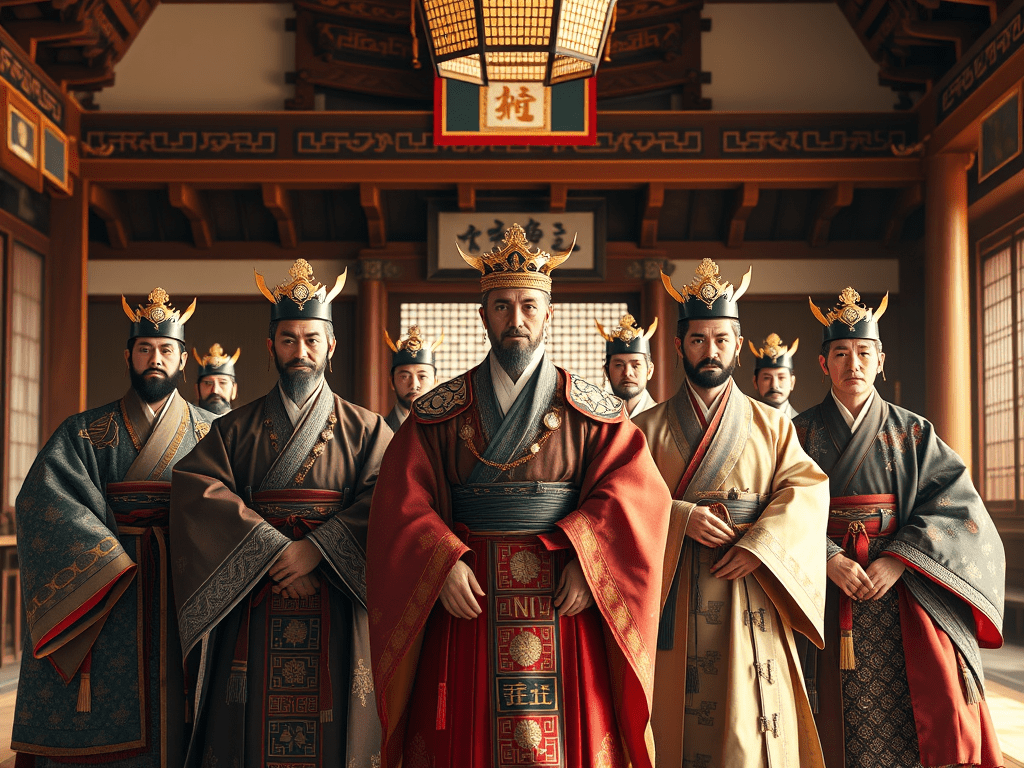
Crown Ranks of Japan: Exploring the Legacy of the Twelve Levels of Rank
Introduction to the Twelve Levels of Rank
Crown Ranks (冠位十二階) refer to the hierarchical system established in ancient Japan to organize the imperial court and civil service. Introduced during the Asuka period, this system set the foundation for a structured and merit-based administration that played a crucial role in the development of Japanese governance.
Historical Background
The Twelve Levels of Rank were formally instituted in the 7th century under the influence of Chinese bureaucratic models. This ranking system was designed to classify officials based on their achievements, abilities, and loyalty to the imperial family. It symbolized a shift towards a more organized and centralized state, laying the groundwork for subsequent governmental reforms.
Structure and Significance
The system divided the court into twelve distinct ranks, each carrying its own privileges and responsibilities. Key aspects include:
- Meritocracy: Officials were promoted based on merit and service, fostering a culture of excellence within the government.
- Centralized Administration: The ranks helped streamline administrative duties and ensure that the central government maintained control over regional affairs.
- Cultural Impact: The system influenced not only governance but also social status, as one’s rank became a symbol of honor and prestige in society.
Legacy of the Crown Ranks
The introduction of the Twelve Levels of Rank was a transformative moment in Japanese history. It laid the foundation for future governmental reforms and shaped the structure of the imperial court for centuries. Today, the legacy of this system can still be seen in modern Japanese bureaucratic practices and is celebrated as a key development in the nation’s political evolution.
 japanews
コメントを残す