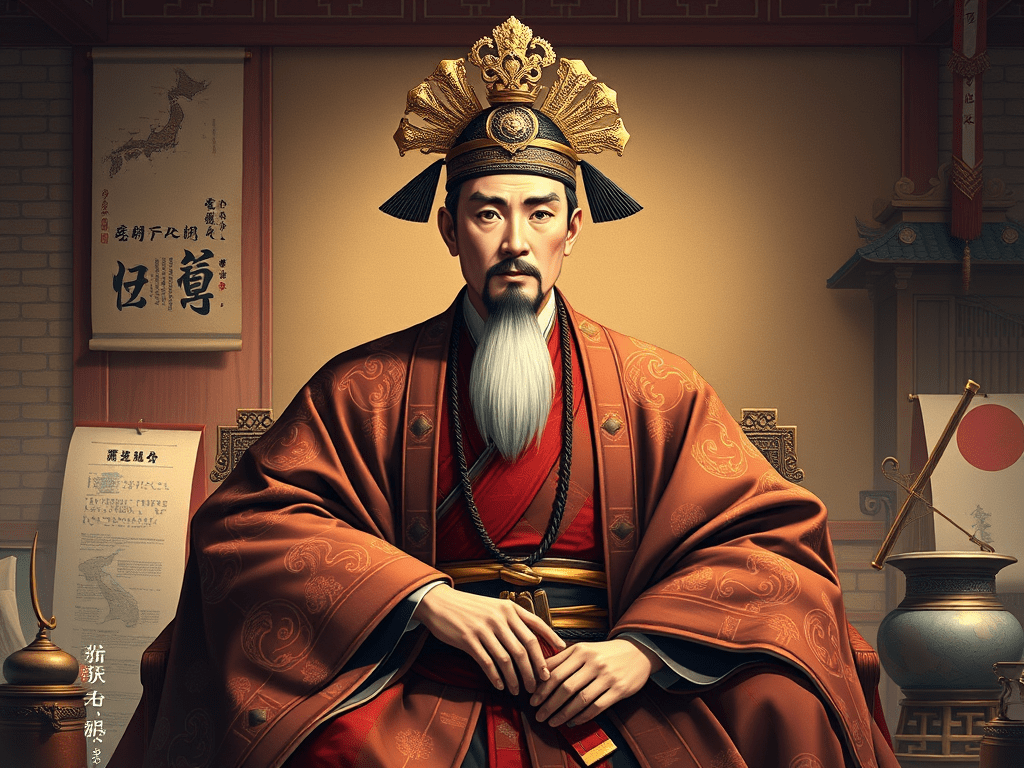
Emperor Tenji (Prince Naka-Oe): The Architect of Japan’s Transformation
Introduction to Emperor Tenji (Prince Naka-Oe)
Emperor Tenji (天智天皇), also known as Prince Naka-Oe (中大兄皇子), was a transformational leader during Japan’s Asuka period. Renowned for his visionary reforms, he played a key role in centralizing power and laying the foundations for Japan’s modern state. His reign marked a significant turning point in the nation’s political and cultural evolution.
Historical Background
Emperor Tenji ascended to the throne during a time of considerable change and consolidation in Japan. His leadership emerged amidst the turbulent transitions following the reign of Empress Suiko, and his policies were instrumental in moving Japan towards a more centralized governmental structure. His era saw the early stirrings of reforms that would later culminate in the Taika Reforms, profoundly influencing Japan’s administrative and legal systems.
Reforms and Achievements
During his reign, Emperor Tenji (Prince Naka-Oe) championed numerous reforms aimed at strengthening the central government and streamlining administrative processes:
- Centralization of Power: His efforts helped consolidate authority, reducing the influence of regional clans and paving the way for a unified state.
- Administrative Innovations: He implemented policies that improved governance, laying the groundwork for future legal and administrative reforms.
- Cultural and Diplomatic Initiatives: Emperor Tenji promoted cultural exchanges and diplomatic relations that enriched Japan’s political and intellectual life.
Legacy of Emperor Tenji
The legacy of Emperor Tenji endures in modern Japan. His visionary leadership not only reformed the state but also influenced the cultural and political trajectory of the nation. Today, he is remembered as a pivotal figure whose reforms set the stage for Japan’s evolution into a centralized and sophisticated society, inspiring future generations with his commitment to progress and unity.
 japanews
コメントを残す