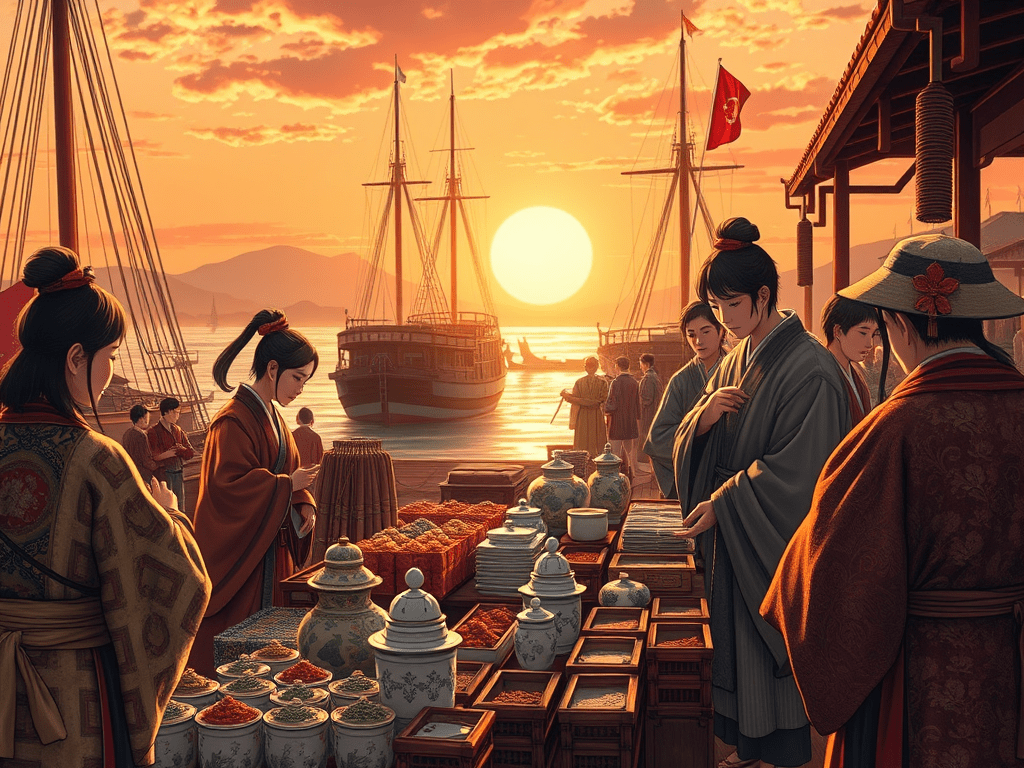
Japan–Song Trade: Bridging Cultures Through Maritime Commerce
Introduction to Japan–Song Trade
Japan–Song Trade (日宋貿易) represents a vibrant era of maritime commerce that connected Japan with Song China. This trade not only spurred economic growth but also facilitated significant cultural and technological exchanges, leaving an enduring mark on both civilizations.
Historical Background
During the Song Dynasty (960–1279 AD), Japan and China engaged in extensive maritime trade, exchanging goods, ideas, and technologies. Japanese merchants imported luxurious goods, ceramics, and textiles, while Chinese products, art, and knowledge found their way into Japanese society. This period of interaction was instrumental in fostering diplomatic ties and mutual cultural appreciation between the two regions.
Key Aspects of the Trade
The Japan–Song trade flourished due to several factors:
- Maritime Routes: Well-established sea routes facilitated the efficient movement of goods, enabling merchants to navigate the complex networks of East Asian trade.
- Economic Exchange: The flow of commodities such as ceramics, spices, and textiles helped stimulate local economies, paving the way for innovative commercial practices.
- Cultural Interactions: Beyond goods, the exchange of artistic styles, religious ideas, and technological innovations enriched both societies, influencing art, literature, and even governance.
Legacy and Modern Impact
The impact of Japan–Song trade is evident in the cultural and economic landscapes of modern East Asia. This period of exchange laid the foundation for later diplomatic relations and contributed to a shared cultural heritage that continues to influence art, cuisine, and technology. Scholars and enthusiasts today study this trade network as a crucial chapter in the history of international commerce and cross-cultural dialogue.
 japanews
コメントを残す