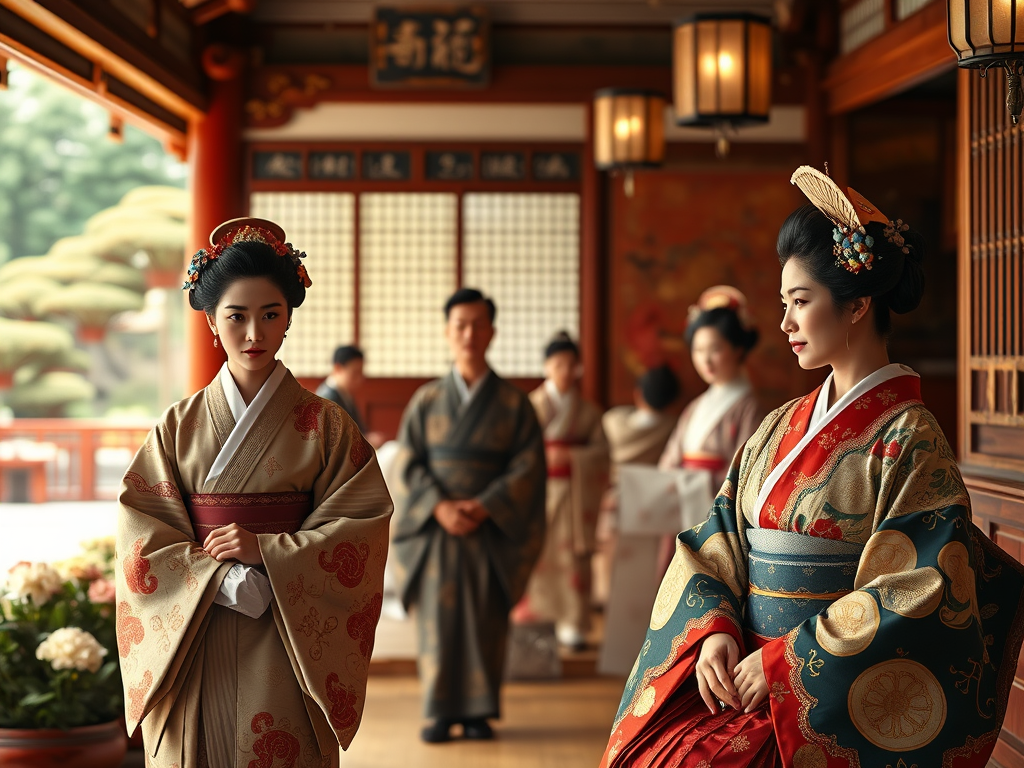
Kuge Society: The Aristocratic Elite of Japan’s Imperial Court
Introduction to Kuge Society
Kuge (公家) refers to the aristocratic class in Japan that flourished in the imperial court, particularly during the Heian period. This elite group was responsible for cultivating refined culture, arts, and politics, and their influence left a lasting imprint on Japan’s history and social structure.
Historical Background
The origins of Kuge Society can be traced back to the early Heian period, when the imperial court became the center of political power and cultural development. Over time, the kuge evolved into a hereditary class, with family lineages that maintained close ties to the emperor. Their status was reinforced through intricate court rituals, strategic marriages, and patronage of the arts, which helped solidify their position within the rigid social hierarchy of ancient Japan.
Social and Cultural Influence
Kuge Society was not only a political force but also a key driver of Japan’s cultural evolution:
- Artistic Patronage: The aristocrats were great patrons of literature, poetry, and visual arts. Their refined tastes influenced the development of classical Japanese aesthetics, as seen in works like the Genji Monogatari and numerous poetic anthologies.
- Court Etiquette and Rituals: The sophisticated rituals and elaborate codes of conduct practiced by the kuge set standards for behavior and social interaction that resonated throughout Japanese society.
- Political Thought: Through their involvement in court politics, the kuge helped shape governmental policies and fostered a culture of intellectual discourse and bureaucratic administration.
Legacy and Modern Relevance
The influence of Kuge Society extends far beyond the Heian period. Although the power of the aristocracy gradually waned with the rise of military governments, the cultural and artistic achievements of the kuge continue to inspire modern Japanese aesthetics and literature. Their legacy is evident in the ongoing appreciation for traditional arts, as well as in the historical narratives that celebrate the sophistication of Japan’s imperial court.
 japanews
コメントを残す