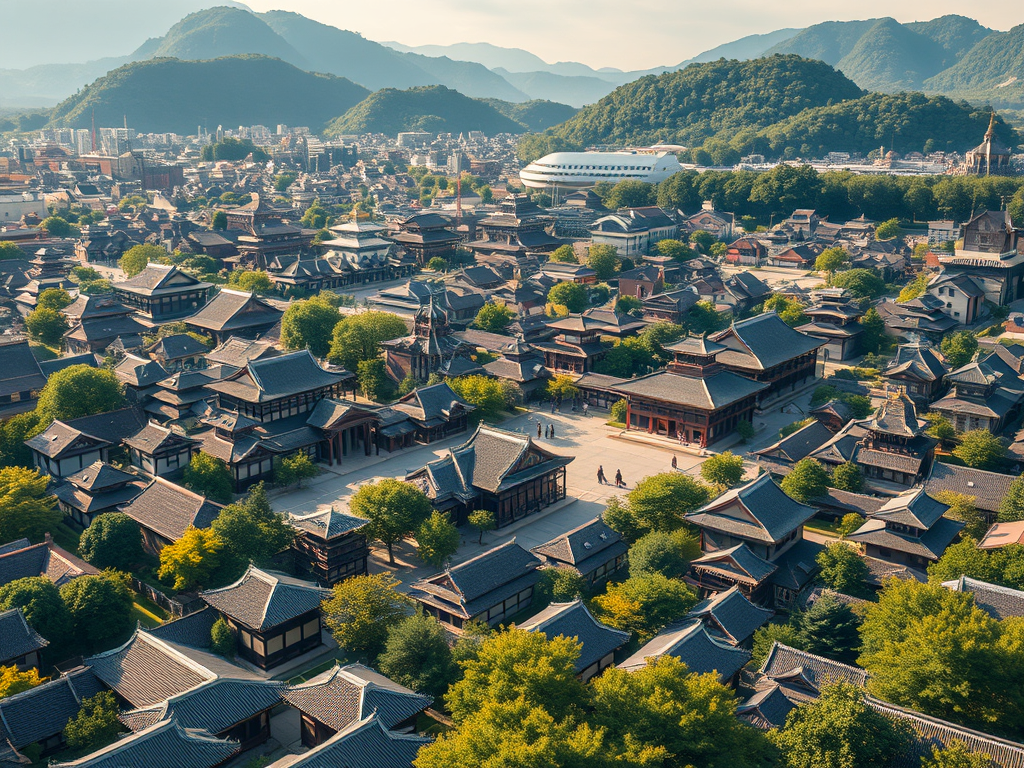
Nagaoka-kyō: The Transitional Capital of Japan’s Early Imperial Era
Introduction to Nagaoka-kyō
Nagaoka-kyō (長岡京) was an important imperial capital in Japan’s history, established during a period of significant transition. Serving as the capital between the Nara and Heian periods, it symbolizes a unique phase in Japan’s state formation and cultural evolution.
Historical Background
Founded in the late 8th century, Nagaoka-kyō was established as the new capital by Emperor Kanmu. Although its tenure as the imperial seat was relatively brief compared to other capitals, the city was designed with careful attention to urban planning and reflected contemporary influences from China. Nagaoka-kyō represented a move toward greater administrative centralization and served as a stepping stone to the eventual establishment of Heian-kyō (modern-day Kyoto).
Urban Planning and Cultural Legacy
Nagaoka-kyō was laid out in a grid pattern, inspired by Chinese capital models, which signified the efforts of the Japanese state to adopt and adapt foreign administrative practices. The city’s design emphasized order and efficiency, which were key to supporting a centralized government. Although many of its structures have not survived, archaeological findings continue to shed light on its layout and the cultural vibrancy of the period.
Legacy and Significance
The legacy of Nagaoka-kyō lies in its role as a transitional capital that bridged two major eras in Japanese history. It laid the administrative and cultural groundwork for the subsequent flourishing of the Heian period, influencing future developments in governance, art, and urban planning. Today, Nagaoka-kyō is remembered as a crucial milestone in Japan’s imperial evolution, offering insights into the dynamic shifts that shaped the nation’s early identity.
 japanews
コメントを残す