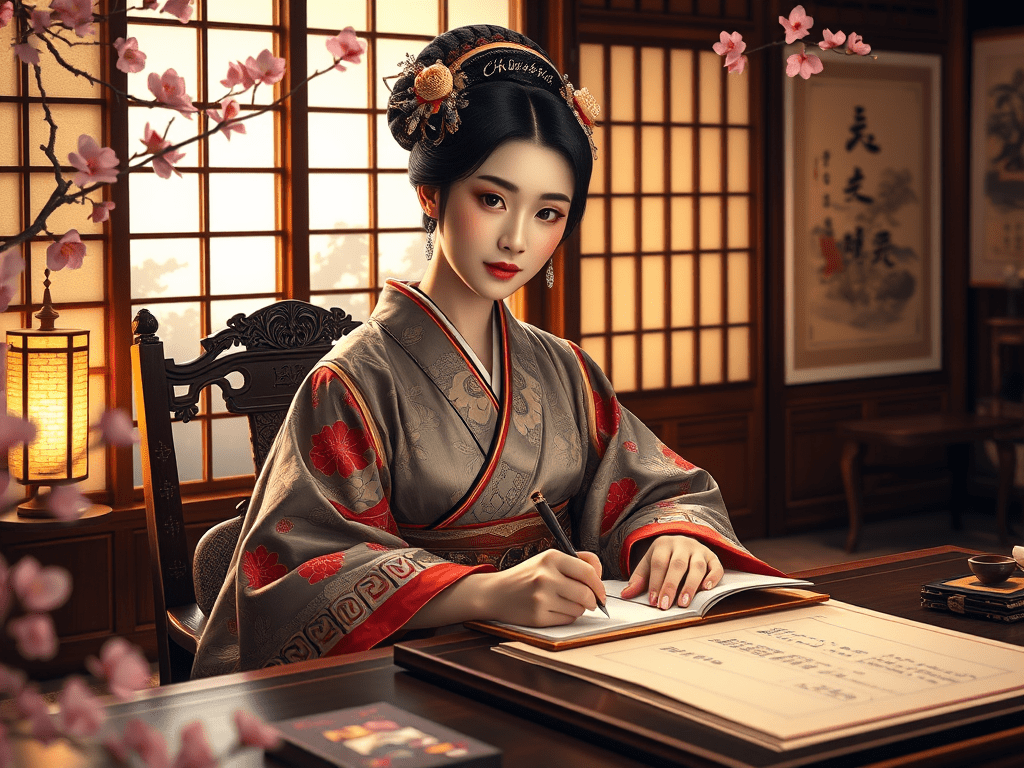
Sei Shonagon: The Brilliant Court Lady and Literary Icon of Heian Japan
Introduction to Sei Shonagon
Sei Shonagon (清少納言) was a court lady during the Heian period whose acute wit and elegant prose have made her a lasting icon in Japanese literature. Best known for her work The Pillow Book, her keen observations and vibrant depictions of court life offer an intimate glimpse into the refined culture and everyday eccentricities of her time.
Historical Background
Sei Shonagon served at the imperial court during one of the most flourishing periods in Japanese history. The Heian era was characterized by a sophisticated aristocratic society, where art, poetry, and aesthetic sensibilities were highly valued. Amid this cultural renaissance, Shonagon’s literary talents shone brightly, reflecting the elegant and sometimes whimsical nature of court life.
Literary Contributions and Style
Her magnum opus, The Pillow Book, is a collection of essays, anecdotes, and lists that capture the vibrant spirit of the Heian court. Key features of her work include:
- Wit and Humor: Shonagon’s clever and often humorous observations bring the nuances of daily life at court to vivid life.
- Elegant Prose: Her refined writing style, filled with poetic imagery and delicate sensibilities, set a high standard for Japanese literature.
- Cultural Insight: Through her detailed accounts, readers gain a unique perspective on the social customs, fashion, and aesthetics that defined the Heian period.
Legacy and Enduring Impact
Sei Shonagon’s work continues to captivate audiences both in Japan and around the world. Her insightful reflections not only preserve a snapshot of an era rich in cultural and artistic achievement but also inspire modern literary and artistic endeavors. As a pioneering female writer, her legacy is celebrated as a testament to the enduring power of creativity and the importance of preserving cultural heritage.
 japanews
コメントを残す