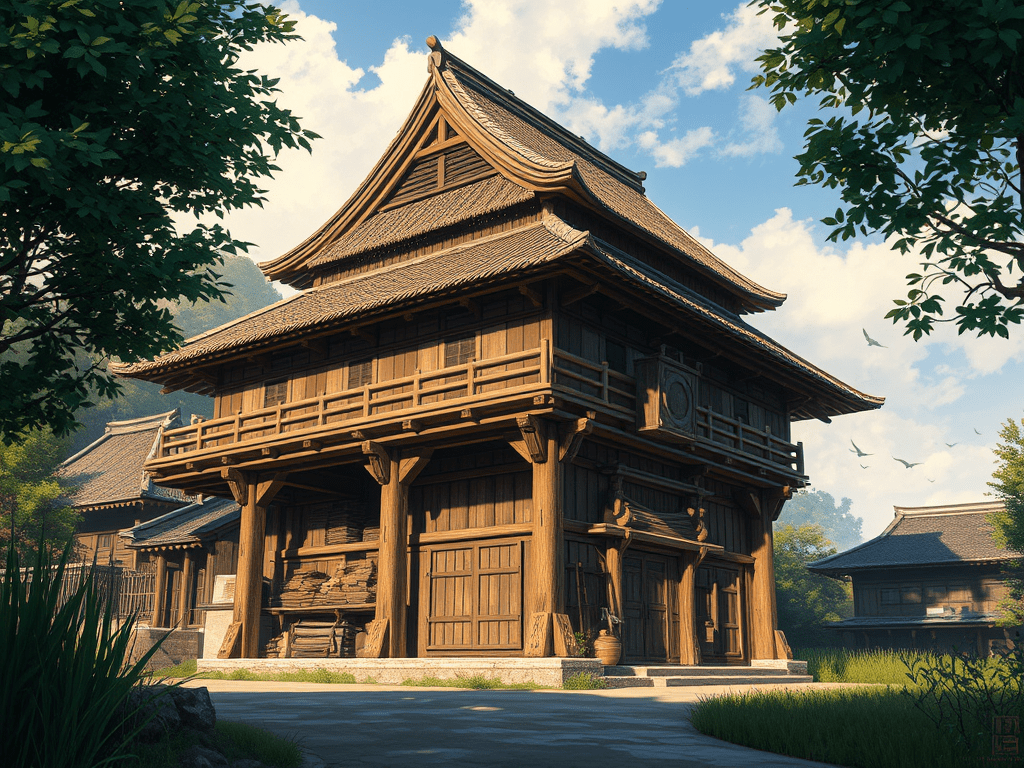
Takayuka-Style Storehouses: The Elevated Granaries of Ancient Japan
What Are Takayuka-Style Storehouses?
Takayuka-style storehouses (高床式倉庫) are elevated granaries built on wooden stilts. These structures were commonly used in ancient Japan, particularly during the Yayoi period (300 BCE – 300 CE) and the Kofun period (250 CE – 538 CE), to store rice and other grains.
Why Were Takayuka-Style Storehouses Elevated?
The key purpose of elevating these storehouses was to protect stored food from natural threats, such as:
- Rodents and insects – The raised structure made it difficult for pests to reach the grain.
- Moisture – Elevation prevented water damage and mold growth, especially in Japan’s humid climate.
- Flooding – In areas prone to heavy rainfall, raised storehouses ensured food remained dry.
The Structure of Takayuka-Style Storehouses
These granaries were typically constructed using:
- Thick wooden pillars – To support the structure and keep it stable.
- Thatched or wooden roofs – To provide protection from rain.
- Ventilation gaps – To keep air circulating and prevent mold.
- Ladders or removable stairs – To allow easy access while keeping out animals.
Historical Sites Featuring Takayuka-Style Storehouses
- Yoshinogari Site (吉野ヶ里遺跡) – A major Yayoi-period settlement in Saga Prefecture with reconstructed elevated storehouses.
- Toro Site (登呂遺跡) – A well-preserved Yayoi village in Shizuoka Prefecture featuring traditional granary designs.
- Izumo Taisha Shrine (出雲大社) – While not a granary, its raised architectural style is believed to have been influenced by Takayuka-style buildings.
The Legacy of Takayuka-Style Storehouses
Although modern storage methods have replaced traditional granaries, Takayuka-style structures are still seen in historical parks and reconstructed villages. Their design also influenced later Japanese architecture, particularly in shrine and temple construction.
 japanews
コメントを残す