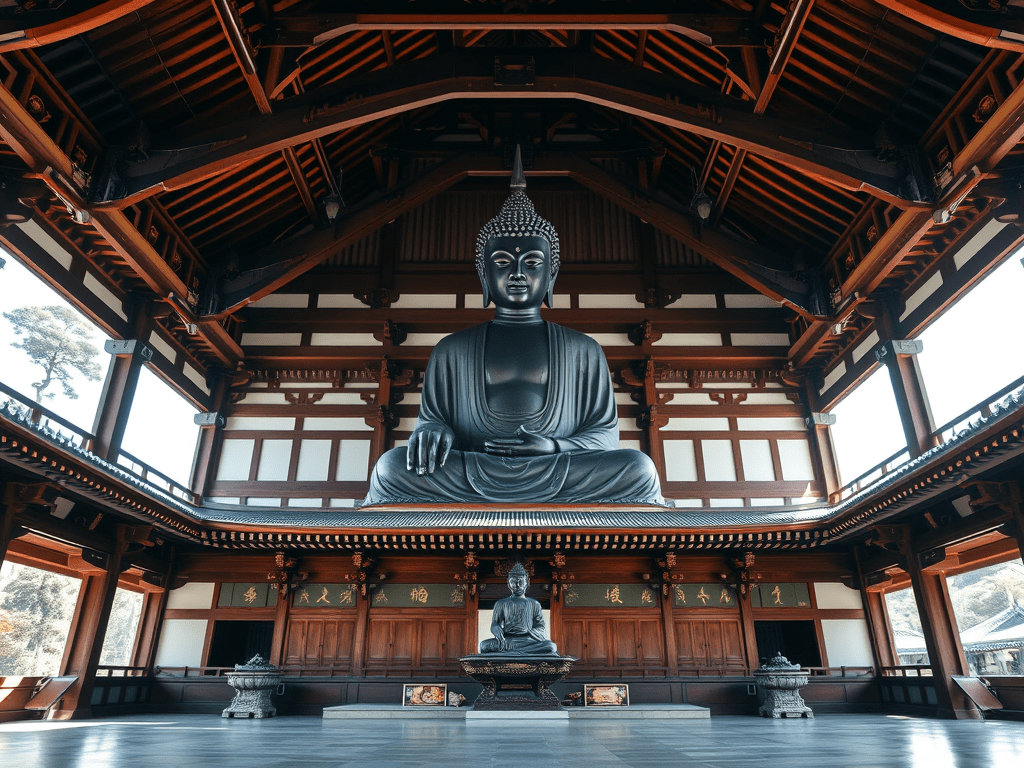
Tōdai-ji: Japan’s Iconic Temple of Buddhist Heritage
Introduction to Tōdai-ji
Tōdai-ji (東大寺) is one of Japan’s most celebrated temples and a UNESCO World Heritage site. Founded during the Nara period, it stands as a monumental symbol of Buddhist faith and artistic achievement, housing the iconic Great Buddha (Daibutsu) and numerous historical treasures.
Historical Background
Established in the 8th century under the patronage of Emperor Shōmu, Tōdai-ji was built to promote Buddhist teachings and unify the country during a time of political and social change. The temple not only served as a religious center but also as an important cultural and administrative hub, reflecting the era’s ambitious state-building efforts.
Architectural and Cultural Significance
Tōdai-ji is renowned for its impressive architectural features and cultural contributions:
- Great Buddha Hall: The Daibutsuden (Great Buddha Hall) is one of the largest wooden structures in the world, housing a colossal bronze statue of Buddha that inspires awe and reverence.
- Artistic Mastery: The temple complex features exquisite sculptures, murals, and calligraphy that exemplify the sophisticated artistry of the Nara period.
- Religious Influence: As a center for Buddhist practice and education, Tōdai-ji has played a pivotal role in disseminating Buddhist philosophy and shaping Japan’s spiritual landscape.
Legacy and Modern Relevance
The enduring legacy of Tōdai-ji is evident in its continued influence on Japanese culture and religion. It remains a vital pilgrimage site, a symbol of national heritage, and a living museum that connects modern society with its ancient past. The temple’s preservation and the ongoing study of its art and architecture provide valuable insights into the evolution of Japanese civilization.









 japanews