カテゴリー: 未分類

  • Tōdai-ji: Japan’s Iconic Temple of Buddhist Heritage

    Tōdai-ji: Japan’s Iconic Temple of Buddhist Heritage

    Tōdai-ji: Japan’s Iconic Temple of Buddhist Heritage

    Introduction to Tōdai-ji

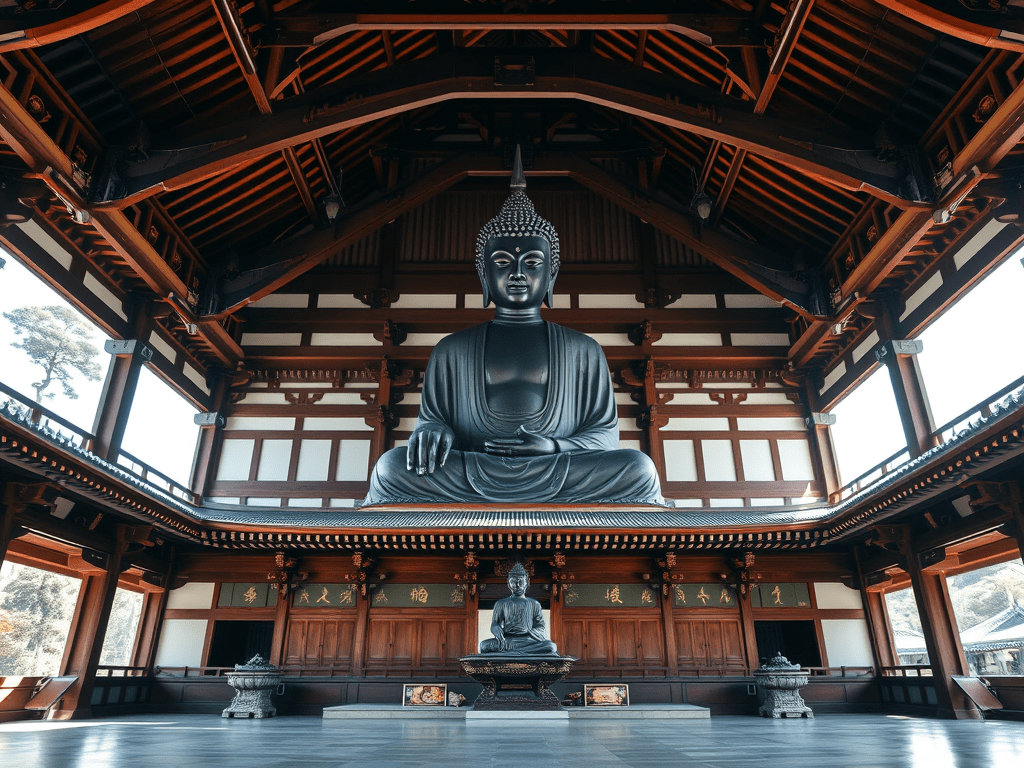
    Tōdai-ji (東大寺) is one of Japan’s most celebrated temples and a UNESCO World Heritage site. Founded during the Nara period, it stands as a monumental symbol of Buddhist faith and artistic achievement, housing the iconic Great Buddha (Daibutsu) and numerous historical treasures.

    Historical Background

    Established in the 8th century under the patronage of Emperor Shōmu, Tōdai-ji was built to promote Buddhist teachings and unify the country during a time of political and social change. The temple not only served as a religious center but also as an important cultural and administrative hub, reflecting the era’s ambitious state-building efforts.

    Architectural and Cultural Significance

    Tōdai-ji is renowned for its impressive architectural features and cultural contributions:

    • Great Buddha Hall: The Daibutsuden (Great Buddha Hall) is one of the largest wooden structures in the world, housing a colossal bronze statue of Buddha that inspires awe and reverence.
    • Artistic Mastery: The temple complex features exquisite sculptures, murals, and calligraphy that exemplify the sophisticated artistry of the Nara period.
    • Religious Influence: As a center for Buddhist practice and education, Tōdai-ji has played a pivotal role in disseminating Buddhist philosophy and shaping Japan’s spiritual landscape.

    Legacy and Modern Relevance

    The enduring legacy of Tōdai-ji is evident in its continued influence on Japanese culture and religion. It remains a vital pilgrimage site, a symbol of national heritage, and a living museum that connects modern society with its ancient past. The temple’s preservation and the ongoing study of its art and architecture provide valuable insights into the evolution of Japanese civilization.
    About the Author


    Japanews

    I am a Japanese resident sharing the rich history and vibrant culture of Japan with the world. Along with reporting the latest news, I delve into unique historical topics that highlight Japan’s enduring legacy. Feel free to explore my online store for traditional Japanese ceramics.

    Visit My Shop


  • Nihon Shoki: The Foundational Chronicle of Japan’s History and Mythology

    Nihon Shoki: The Foundational Chronicle of Japan’s History and Mythology

    Nihon Shoki: The Foundational Chronicle of Japan’s History and Mythology

    Introduction to Nihon Shoki

    Nihon Shoki (日本書紀) is one of the most important historical texts of Japan, compiled in 720 AD. As the second oldest book of Japanese history after the Kojiki, it offers a comprehensive account of Japan’s mythical origins, the genealogies of its deities, and the early historical events that shaped the nation’s identity.

    Historical Background

    Commissioned by the imperial court, the Nihon Shoki was created to provide a more detailed and systematic narrative of Japan’s past. Drawing from various oral traditions, earlier records, and Chinese historical methods, it was designed to legitimize the ruling dynasty and promote a unified cultural vision. Its compilation marked a turning point in the integration of myth and history in Japan.

    Content and Structure

    The chronicle is divided into multiple volumes, each chronicling different eras of Japanese history. Key elements include:

    • Mythological Origins: Accounts of the creation of Japan and the divine lineage of its gods.
    • Genealogical Records: Detailed lists of emperors and notable figures that connect myth with historical reality.
    • Historical Narratives: Descriptions of significant events, battles, and political reforms that laid the groundwork for the Japanese state.

    Legacy and Influence

    The Nihon Shoki has had a profound impact on Japanese culture and historiography. It not only established the framework for the nation’s historical identity but also influenced literature, art, and religious practices for centuries. Scholars continue to study its narratives to gain insights into the early formation of Japan, making it a timeless resource in understanding the country’s heritage.

    About the Author


    Japanews

    I am a Japanese resident sharing the rich history and vibrant culture of Japan with the world. In addition to reporting the latest news, I explore unique historical topics that highlight Japan’s enduring legacy. Feel free to explore my online store for traditional Japanese ceramics.

    Visit My Shop


  • Kojiki: Unveiling Japan’s Ancient Chronicle of Myths and History

    Kojiki: Unveiling Japan’s Ancient Chronicle of Myths and History

    Kojiki: Unveiling Japan’s Ancient Chronicle of Myths and History

    Introduction to Kojiki

    Kojiki (古事記) is Japan’s oldest extant chronicle, a foundational text that weaves together myth, legend, and historical narrative. Compiled in the early 8th century, it provides a rich tapestry of Japan’s creation myths and the genealogies of its deities and early emperors, forming a cornerstone of Japanese cultural identity.

    Historical Background

    The Kojiki was compiled in 712 AD under the auspices of the imperial court, with the aim of preserving the ancient traditions and oral histories of Japan. This seminal work was influenced by both indigenous beliefs and continental (particularly Chinese) cultural elements. As one of the earliest records, it has been invaluable in shaping the historical and mythological understanding of Japan’s origins.

    Significance and Content

    The text is divided into three parts, each detailing different epochs in Japanese history—from the divine creation of the islands to the reigns of legendary emperors. Its significance lies in:

    • Mythological Narratives: The Kojiki offers insights into the creation myths and the pantheon of Japanese deities, highlighting the spiritual worldview of ancient Japan.
    • Historical Record: Although interwoven with myth, the chronicle provides a framework for understanding the early lineage of Japanese rulers and the evolution of statehood.
    • Cultural Legacy: Its influence permeates Japanese literature, art, and religious practice, reinforcing a sense of national identity rooted in myth and tradition.

    Legacy and Modern Relevance

    The Kojiki continues to be a subject of scholarly study and cultural reverence. Its narratives have inspired countless works of art, literature, and religious thought throughout Japan’s history. Today, it remains a vital link to Japan’s ancient past, offering modern readers a window into the mythic origins and enduring cultural spirit of the nation.

    About the Author


    Japanews

    I am a Japanese resident sharing the rich history and vibrant culture of Japan with the world. In addition to reporting the latest news, I explore unique historical topics that highlight Japan’s enduring legacy. Feel free to explore my online store for traditional Japanese ceramics.

    Visit My Shop


  • Dōkyō: The Controversial Monk Who Swayed Imperial Politics

    Dōkyō: The Controversial Monk Who Swayed Imperial Politics

    Dōkyō: The Controversial Monk Who Swayed Imperial Politics

    Introduction to Dōkyō

    Dōkyō (道鏡) was a Buddhist monk whose rise to prominence during the reign of Empress Kōken remains one of the most controversial episodes in Japanese history. His deep involvement in court politics and religious affairs stirred both admiration and fierce opposition, ultimately influencing the course of imperial governance.

    Historical Background

    Dōkyō’s ascent occurred during the Nara period, a time when Buddhism was rapidly taking root in Japan. His close relationship with Empress Kōken enabled him to gain unprecedented influence within the imperial court. However, his involvement in political decisions and his ambition to wield power sparked considerable controversy and unease among the traditional elite.

    Controversial Influence on the Court

    Despite his religious credentials, Dōkyō’s deep engagement in state affairs led to intense debates about the proper role of monks in politics. His critics argued that his actions undermined the established order, while his supporters saw him as a reformer bringing new perspectives to governance. The controversy surrounding his influence eventually contributed to a significant shift in the court’s approach to the intersection of religion and politics.

    Legacy and Impact

    Though Dōkyō’s direct political influence was short-lived, the repercussions of his actions had a lasting impact on Japanese society. His controversial tenure prompted a reexamination of the separation between religious authority and state power, influencing subsequent reforms and setting precedents for future governance. Today, Dōkyō remains a compelling figure, emblematic of the challenges that arise when spiritual authority intersects with political ambition.

    About the Author


    Japanews

    I am a Japanese resident sharing the rich history and vibrant culture of Japan with the world. Along with reporting the latest news, I explore unique historical topics that highlight Japan’s enduring legacy. Feel free to explore my online store for traditional Japanese ceramics.

    Visit My Shop


  • Emperor Kanmu: The Visionary Architect of Japan’s Heian Era

    Emperor Kanmu: The Visionary Architect of Japan’s Heian Era

    Emperor Kanmu: The Visionary Architect of Japan’s Heian Era

    Introduction to Emperor Kanmu

    Emperor Kanmu (桓武天皇) was a transformative figure in Japanese history. Reigning during the early Heian period, he is best known for his bold reforms and the establishment of the new capital, Heian-kyō, which laid the foundations for Japan’s cultural and political renaissance.

    Historical Background

    Ascending the throne in 781 AD, Emperor Kanmu inherited a state in need of reorganization and renewal. Amidst internal conflicts and external pressures, his reign marked a decisive turn toward centralized administration and cultural sophistication. His decision to relocate the capital from Nara to Heian-kyō was driven by the desire to distance the government from the influence of powerful Buddhist institutions and to foster a new era of imperial governance.

    Key Reforms and Achievements

    Emperor Kanmu’s reign was characterized by several significant reforms and initiatives:

    • Capital Relocation: The establishment of Heian-kyō in 794 AD not only symbolized a fresh start but also became a center of political power and cultural creativity for centuries.
    • Administrative Reforms: Kanmu implemented policies to centralize and streamline government functions, which strengthened imperial control and set the stage for subsequent reforms.
    • Cultural Patronage: His support for arts and literature helped foster a vibrant cultural environment, laying the groundwork for the classical Heian aesthetic that continues to influence Japanese art and literature.

    Legacy and Impact

    The legacy of Emperor Kanmu endures in the enduring influence of Heian-kyō, which evolved into modern-day Kyoto, a city celebrated for its rich cultural heritage. His forward-thinking reforms not only transformed the political landscape of his time but also left a lasting imprint on Japan’s cultural identity. Today, Emperor Kanmu is revered as a visionary leader whose contributions continue to shape the historical narrative of Japan.

    About the Author


    Japanews

    I am a Japanese resident sharing the rich history and vibrant culture of Japan with the world. Along with reporting the latest news, I explore unique historical topics that highlight Japan’s enduring legacy. Feel free to explore my online store for traditional Japanese ceramics.

    Visit My Shop


  • Inukai Sanchiyo: A Visionary Prefectural Leader of Historical Japan

    Inukai Sanchiyo: A Visionary Prefectural Leader of Historical Japan

    Inukai Sanchiyo: A Visionary Prefectural Leader of Historical Japan

    Introduction to Inukai Sanchiyo

    Inukai Sanchiyo (県犬養三千代) is remembered as a pioneering figure in regional leadership during a formative period of Japanese history. His dedication to public service and his innovative approach to local governance set him apart as a visionary leader whose efforts helped shape the administrative and cultural landscape of his community.

    Historical Background

    Emerging during a time when local governance was evolving, Inukai Sanchiyo played a crucial role in streamlining administrative practices within his region. His tenure was marked by a commitment to public welfare, economic stability, and the preservation of cultural traditions, reflecting the broader trends of reform and modernization that were gradually influencing Japan as a whole.

    Contributions and Achievements

    Inukai Sanchiyo’s career is distinguished by several key contributions:

    • Administrative Innovation: He introduced reforms aimed at creating more efficient and transparent local governance, which fostered community trust and improved public services.
    • Cultural Development: Beyond administration, Sanchiyo supported cultural initiatives that preserved local heritage and promoted educational opportunities, ensuring that traditional arts and customs thrived.
    • Economic and Social Progress: His policies not only stabilized the local economy but also encouraged social cohesion, paving the way for sustainable regional growth.

    Legacy and Impact

    The legacy of Inukai Sanchiyo endures as a testament to the enduring power of visionary local leadership. His innovative reforms and dedication to cultural enrichment continue to inspire modern administrators and serve as a reminder of the vital role that effective governance plays in shaping a community’s future. Today, his contributions are celebrated in local histories and cultural festivals, ensuring that his memory remains a guiding light for future generations.

    About the Author


    Japanews

    I am a Japanese resident sharing the rich history and vibrant culture of Japan with the world. In addition to reporting the latest news, I delve into unique historical topics that highlight Japan’s enduring legacy. Feel free to explore my online store for traditional Japanese ceramics.

    Visit My Shop


  • Ōtomo no Yakamochi: The Statesman and Poet Who Shaped Japan’s Literary Tradition

    Ōtomo no Yakamochi: The Statesman and Poet Who Shaped Japan’s Literary Tradition

    Ōtomo no Yakamochi: The Statesman and Poet Who Shaped Japan’s Literary Tradition

    Introduction to Ōtomo no Yakamochi

    Ōtomo no Yakamochi (大伴家持) was a celebrated figure in Japan’s Nara period, renowned both as a distinguished statesman and one of the greatest poets of the Man’yōshū. His dual legacy in governance and literature helped shape the cultural and political landscape of early Japan.

    Historical Background

    As a member of the influential Ōtomo clan, Yakamochi played a key role in the administration of the imperial court. His career spanned a time of significant political transformation, during which he also emerged as a prolific poet. His works, many of which are featured in the Man’yōshū, capture the spirit, emotions, and natural beauty of his era, reflecting both personal insights and the broader cultural milieu of the time.

    Achievements and Contributions

    Ōtomo no Yakamochi’s contributions were multifaceted:

    • Literary Mastery: As one of the principal compilers and contributors to the Man’yōshū, his poetry set high standards for Japanese literature and influenced countless generations of poets.
    • Political Service: His role as a statesman helped to strengthen the centralized governance of the imperial court, contributing to the stabilization and organization of early Japanese administration.
    • Cultural Legacy: Yakamochi’s works provide invaluable insights into the social, political, and natural world of his time, offering a window into the values and aesthetics of ancient Japan.

    Legacy and Impact

    The legacy of Ōtomo no Yakamochi endures in both the realms of literature and governance. His poetry remains a cornerstone of classical Japanese literature, celebrated for its emotional depth and vivid imagery. Simultaneously, his contributions to statecraft helped pave the way for the future development of a centralized imperial system, leaving an indelible mark on Japan’s historical evolution.

    About the Author


    Japanews

    I am a Japanese resident sharing the rich history and vibrant culture of Japan with the world. In addition to reporting the latest news, I explore unique historical topics that highlight Japan’s enduring legacy. Feel free to explore my online store for traditional Japanese ceramics.

    Visit My Shop


  • Fujiwara no Nagate: A Steadfast Architect of Early Imperial Administration

    Fujiwara no Nagate: A Steadfast Architect of Early Imperial Administration


    Fujiwara no Nagate: A Steadfast Architect of Early Imperial Administration

    Introduction to Fujiwara no Nagate

    Fujiwara no Nagate (藤原永手) was an influential figure within the early Fujiwara clan. Known for his steadfast approach and commitment to effective governance, Nagate played a vital role in the development of Japan’s imperial administrative system during a formative period in the nation’s history.

    Historical Background

    Emerging during the era when Japan was solidifying its centralized government, Fujiwara no Nagate contributed to the establishment of administrative practices that would later define the imperial court. His career was marked by a dedication to statecraft and a keen understanding of the evolving political landscape, making him a respected statesman among his contemporaries.

    Contributions and Achievements

    Nagate’s work is remembered for several key accomplishments:

    • Administrative Reforms: He was involved in efforts to streamline governmental functions and to integrate regional authorities under the central power of the court.
    • Strengthening the Fujiwara Legacy: His initiatives helped to reinforce the influence of the Fujiwara clan, setting a precedent for their enduring role in Japanese politics.
    • Diplomatic Engagement: By forging strategic alliances and advising on policy, he contributed to the stabilization and growth of the imperial state during a time of dynamic change.

    Legacy and Impact

    The enduring legacy of Fujiwara no Nagate lies in his contribution to the early consolidation of Japan’s imperial administration. His work not only strengthened central authority but also laid the groundwork for reforms that would influence subsequent generations. Today, his efforts are recognized as an integral part of the rich tapestry of Japan’s historical evolution and the development of its political institutions.

    About the Author


    Japanews

    I am a Japanese resident sharing the rich history and vibrant culture of Japan with the world. In addition to reporting the latest news, I explore unique historical topics that highlight Japan’s enduring legacy. Feel free to explore my online store for traditional Japanese ceramics.

    Visit My Shop


  • Fujiwara no Nakamaro: The Visionary Statesman of Japan’s Nara Era

    Fujiwara no Nakamaro: The Visionary Statesman of Japan’s Nara Era

    Fujiwara no Nakamaro: The Visionary Statesman of Japan’s Nara Era

    Introduction to Fujiwara no Nakamaro

    Fujiwara no Nakamaro (藤原仲麻呂) was a prominent political figure during Japan’s Nara period. As a key member of the influential Fujiwara clan, he played a critical role in shaping the imperial court through his diplomatic finesse and reformative policies.

    Historical Background

    Active during a transformative era, Fujiwara no Nakamaro was instrumental in integrating continental administrative practices into Japanese governance. His career unfolded amidst the backdrop of intense political reform and state centralization, marking him as one of the leading architects of early imperial administration.

    Key Contributions and Achievements

    Nakamaro’s career is remembered for several notable achievements:

    • Diplomatic Expertise: He skillfully navigated complex court politics and forged strategic alliances that reinforced the central authority of the emperor.
    • Administrative Reforms: His efforts contributed to streamlining the bureaucratic structure, which laid the groundwork for the centralized governance that characterized the Nara period.
    • Cultural Impact: By promoting policies that encouraged cultural and technological exchange, Nakamaro helped infuse the Japanese state with new ideas that would influence its evolution for centuries.

    Legacy and Enduring Influence

    Fujiwara no Nakamaro’s impact on Japanese history is profound. His reforms and diplomatic achievements not only strengthened the imperial court during his lifetime but also set precedents for future generations. Today, his legacy is celebrated as part of the rich heritage of the Fujiwara clan and the enduring evolution of Japan’s statecraft.

    About the Author


    Japanews

    I am a Japanese resident sharing the rich history and vibrant culture of Japan with the world. In addition to reporting the latest news, I explore unique historical topics that highlight Japan’s enduring legacy. Feel free to explore my online store for traditional Japanese ceramics.

    Visit My Shop


  • Emperor Shōmu: The Devout Ruler Who Embodied Buddhist Vision in Japan

    Emperor Shōmu: The Devout Ruler Who Embodied Buddhist Vision in Japan

    Emperor Shōmu: The Devout Ruler Who Embodied Buddhist Vision in Japan

    Introduction to Emperor Shōmu

    Emperor Shōmu (聖武天皇) was one of Japan’s most influential and devout rulers. Ascending the throne during the Nara period, his reign was marked by a deep commitment to Buddhism, which he used as a tool for both spiritual renewal and political unification.

    Historical Background

    Emperor Shōmu ruled during a time when Japan was undergoing significant transformation. His policies were influenced by both indigenous traditions and continental ideas, particularly from China and Korea. With the introduction and promotion of Buddhism, he sought to forge a unified national identity and stabilize the state amidst internal and external challenges.

    Embrace of Buddhism and Cultural Reforms

    Emperor Shōmu is best known for his ardent support of Buddhism:

    • Building Temples: He commissioned the construction of monumental temples, including the world-famous Tōdai-ji, which houses the Great Buddha (Daibutsu). These temples became centers of learning and cultural exchange.
    • Religious Reforms: Shōmu’s reign promoted Buddhist ethics and philosophy as guiding principles for governance, emphasizing compassion, moral integrity, and social harmony.
    • Cultural Integration: His efforts helped integrate Buddhist art, literature, and ritual into Japanese culture, leaving a legacy that continues to influence Japan’s spiritual and artistic heritage.

    Political and Administrative Achievements

    Beyond his religious contributions, Emperor Shōmu also implemented significant state reforms:

    • Centralization of Power: His administration worked to consolidate power and streamline governance, setting precedents for later state reforms.
    • Infrastructure Development: Investments in public works, including roads, irrigation, and temple complexes, bolstered both the economy and the cultural fabric of the nation.
    • Diplomatic Engagement: His reign saw improved diplomatic relations with neighboring states, which furthered Japan’s international stature.

    Legacy and Enduring Influence

    Emperor Shōmu’s impact on Japan is profound and enduring. His integration of Buddhist values with statecraft not only transformed the cultural landscape but also laid the foundations for a centralized and stable government. Today, his legacy is celebrated in both historical scholarship and cultural traditions, symbolizing the harmonious blend of spirituality and governance that continues to inspire Japan.

    About the Author


    Japanews

    I am a Japanese resident sharing the rich history and vibrant culture of Japan with the world. In addition to reporting the latest news, I explore unique historical topics that highlight Japan’s enduring legacy. Feel free to explore my online store for traditional Japanese ceramics.

    Visit My Shop