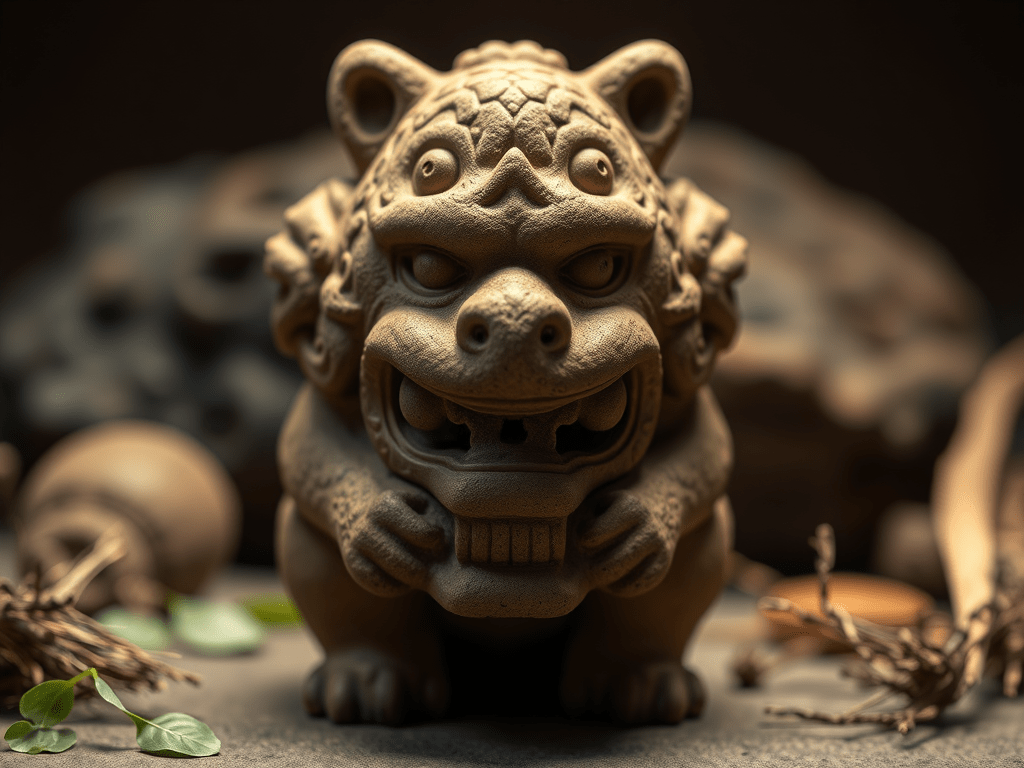
Dogu: Mysterious Clay Figurines of Japan’s Jomon Period
What Are Dogu?
Dogu (土偶) are ancient clay figurines created during the Jomon period (14,000 BCE – 300 BCE). These mysterious artifacts are believed to have had religious or ritualistic significance, though their exact purpose remains unknown.
Characteristics of Dogu
Dogu figurines exhibit exaggerated human-like features, often with large eyes, small waists, and elaborate decorations. They vary in size, with some being only a few centimeters tall, while others reach up to 30 cm.
Types of Dogu
- Shakoki Dogu (遮光器土偶) – “Goggle-eyed” figurines, named for their large, round eyes.
- Heart-shaped Dogu (ハート形土偶) – Featuring a rounded face resembling a heart.
- Pregnant Dogu – Representing fertility and childbirth.
The Purpose of Dogu
While their exact function is unknown, scholars believe Dogu were used in fertility rituals, healing practices, or shamanistic ceremonies. Many Dogu have been found with broken limbs, leading to theories that they were intentionally broken during rituals.
Famous Dogu Discoveries
- Gasso Dogu (合掌土偶) – A figurine with hands pressed together in prayer, found in Aomori Prefecture.
- Shakoki Dogu (遮光器土偶) – One of the most famous Dogu, discovered in northern Japan.
- Jomon Venus (縄文のビーナス) – A beautifully crafted Dogu found at the Tanabatake site in Nagano Prefecture.
Dogu in Modern Japan
Today, Dogu continue to inspire artists and historians. Replicas are sold as souvenirs, and their unique designs have even influenced modern pop culture.
 japanews
コメントを残す